Rated 1 out of
5 by
AP from
Non specific signal in WB (1/200) on mouseNon specific signal in WB (1/200) on mouse skeletal muscleDate published: 2016-04-11
Rated 5 out of
5 by
Roger from
Working well in WB in mouse muscleWorking well in WB in mouse muscle.Date published: 2015-07-23
Rated 4 out of
5 by
JL from
WB dilWB dil. 1/200 on rat gastrocnemius muscle - Published dataDate published: 2015-06-26
Rated 4 out of
5 by
HC from
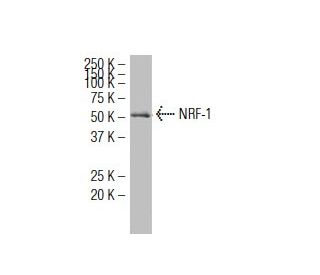
Strong bands seen in WB using UStrong bands seen in WB using U-2 OS, CCRF-CEM and MOLT-4 whole cell lysates and rat skeletal muscle tissue extract. -SCBT QCDate published: 2015-05-08
Rated 4 out of
5 by
TS from
Good bands seen in WB using HeLaGood bands seen in WB using HeLa, Hep G2, MCF7 and K-562 whole cell lysates. -SCBT QCDate published: 2015-04-20
Rated 5 out of
5 by
JM from
Produced excellent immunoperoxidase nuclearProduced excellent immunoperoxidase nuclear staining in formalin fixed, paraffin-embedded human placenta tissue. -SCBT QCDate published: 2015-02-07
Rated 4 out of
5 by
JL from
Publishable data in IF using rat eyePublishable data in IF using rat eye. -SCBT Publication ReviewDate published: 2015-02-01
Rated 4 out of
5 by
FL from
Various publishable data in WB using ratVarious publishable data in WB using rat skeletal muscle. -SCBT QCDate published: 2015-01-18