
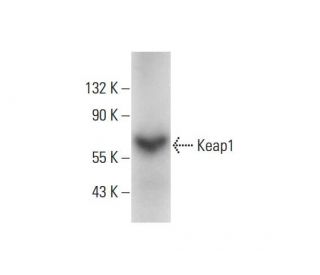

这种多克隆抗体已经停产。请参阅我们推荐的Keap1 (G-2)单克隆抗体(显示样本数据)。
Keap1 抗体 (H-190): sc-33569
- Keap1 抗体 H-190 是兔多克隆 IgG,提供 200 µg/ml
- 抗原表位对应的氨基酸序列181-370位于human物种的Keap1的内部区域内
- 下架的多克隆抗体

快捷链接
描述
関連項目
仅限研究使用。不适用于诊断和治疗用途。
Alexa Fluor® 是Molecular Probes Inc., OR., USA的商标
订购信息
Keap1 (G-2): sc-365626 [用于替代Keap1 (H-190)的推荐单抗]
| 产品名称 | 产品编号 | 规格 | 价格 | 数量 | 收藏夹 | |
Keap1 抗体 (G-2) | sc-365626 | 200 µg/ml | $322.00 | |||
Keap1 (G-2): m-IgGκ BP-HRP 套装 | sc-522298 | 200 µg Ab, 40 µg BP | $361.00 | |||
Keap1 (G-2): m-IgG2b BP-HRP 套装 | sc-549019 | 200 µg Ab; 10 µg BP | $361.00 | |||
Keap1 抗体 (G-2) AC | sc-365626 AC | 500 µg/ml, 25% agarose | $424.00 | |||
Keap1 抗体 (G-2) HRP | sc-365626 HRP | 200 µg/ml | $322.00 | |||
Keap1 抗体 (G-2) FITC | sc-365626 FITC | 200 µg/ml | $336.00 | |||
Keap1 抗体 (G-2) PE | sc-365626 PE | 200 µg/ml | $349.00 | |||
Keap1 抗体 (G-2) Alexa Fluor® 488 | sc-365626 AF488 | 200 µg/ml | $364.00 | |||
Keap1 抗体 (G-2) Alexa Fluor® 546 | sc-365626 AF546 | 200 µg/ml | $364.00 | |||
Keap1 抗体 (G-2) Alexa Fluor® 594 | sc-365626 AF594 | 200 µg/ml | $364.00 | |||
Keap1 抗体 (G-2) Alexa Fluor® 647 | sc-365626 AF647 | 200 µg/ml | $364.00 | |||
Keap1 抗体 (G-2) Alexa Fluor® 680 | sc-365626 AF680 | 200 µg/ml | $364.00 | |||
Keap1 抗体 (G-2) Alexa Fluor® 790 | sc-365626 AF790 | 200 µg/ml | $364.00 |