
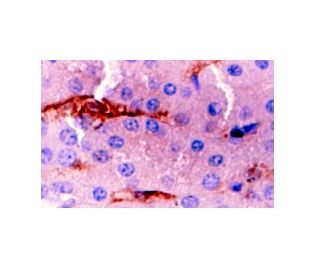


ACE 抗体 (5C5): sc-23909. 福尔马林固定, 石蜡包埋的小鼠肾脏的免疫过氧化物酶染色, 显示膜和细胞外定位.
ACE 抗体 (5C5): sc-23909
- ACE抗体(5C5)是小鼠单克隆IgG1 κ, 在3篇文献中引用,规格为200 µg/ml
- 针对human肺血管紧张素转换酶
- 推荐用于 mouse, rat 和 human 来源的ACE WB, IP, IF 和 IHC(P)检测
- 另提供琼脂糖偶联抗体,可用于IP实验
- 看 ACE (2E2): sc-23908,可查看有标记的 ACE 抗体,包括AC, HRP, FITC, PE, Alexa Fluor® 488, 594, 647, 680 和 790
- m-IgG Fc BP-HRP、 1 BP-HRP">m-IgG1 BP-HRP和m-IgGκ BP-HRP是ACE Antibody (5C5) 适用于 WB 和 IHC(P) 应用。 的首选辅助检测试剂。这些试剂现与ACE Antibody (5C5) 打包提供(请参阅下面的订购信息)。

ACE抗体(5C5)是一种小鼠单克隆IgG1 kappa轻链抗体,专门针对血管紧张素转换酶(ACE),也称为CD143或血管紧张素转换酶1。ACE单克隆抗体(5C5)针对人类肺源性ACE产生,可通过蛋白质印迹(WB)、免疫沉淀(IP)、免疫荧光(IF)和石蜡包埋切片免疫组织化学(IHCP)等方法有效检测小鼠、大鼠和人类来源的ACE蛋白。抗ACE抗体(5C5)有非结合型和多种结合型,包括辣根过氧化物酶(HRP)、藻红蛋白(PE)、异硫氰酸荧光素(FITC)以及不同的Alexa Fluor®变体,可满足各种研究需求。血管紧张素转换酶(ACE)是一种膜结合羧基末端二肽外切酶,位于肺、肝、肾上腺皮质、胰腺、肾和脾脏等器官的血管内皮细胞表面。ACE在肾素-血管紧张素系统中起着关键作用,它将血管紧张素I转化为强效血管收缩素激素血管紧张素II,从而调节血压和电解质平衡。此外,ACE还能使血管收缩素--一种血管收缩素肽失活,从而维持体液和电解质的平衡。ACE有两种主要的同工型:肺ACE(ACEP)和睾丸ACE(ACET),其中ACEP广泛表达于血管系统,而ACET仅表达于成年睾丸中的发育中的精子细胞。ACE在细胞中的精确定位对于其在心血管健康和疾病中的作用至关重要,这使得ACE单克隆抗体(5C5)成为研究人员研究高血压、心血管疾病和相关生理过程的重要工具。
仅限研究使用。不适用于诊断和治疗用途。
订购信息
| 产品名称 | 产品编号 | 规格 | 价格 | 数量 | 收藏夹 | |
ACE 抗体 (5C5) | sc-23909 | 200 µg/ml | $322.00 | |||
ACE (5C5): m-IgG Fc BP-HRP 套装 | sc-536686 | 200 µg Ab; 10 µg BP | $361.00 | |||
ACE (5C5): m-IgGκ BP-HRP 套装 | sc-533846 | 200 µg Ab; 40 µg BP | $361.00 | |||
ACE (5C5): m-IgG1 BP-HRP 套装 | sc-544766 | 200 µg Ab; 20 µg BP | $361.00 | |||
ACE 抗体 (5C5) AC | sc-23909 AC | 500 µg/ml, 25% agarose | $424.00 |