
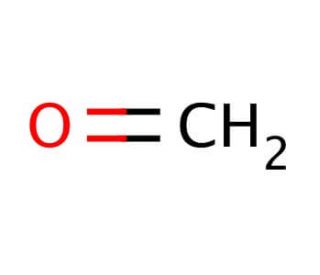

Formaldehyde (CAS 50-00-0)
See product citations (10)
QUICK LINKS
Formaldehyde, a simple organic compound with the chemical formula CH2O, plays a pivotal role in various scientific research fields. In laboratory settings, it is utilized for its versatile properties and applications. One of the primary uses of formaldehyde in research is as a fixative. Its ability to cross-link proteins makes it invaluable for preserving tissues and cells for microscopic examination. Formaldehyde fixation stabilizes cellular structures, preventing degradation and preserving cellular morphology, which is crucial for detailed analysis and diagnosis. Moreover, formaldehyde finds extensive use in molecular biology as a cross-linking agent in chromatin immunoprecipitation (ChIP) assays. In ChIP, formaldehyde is employed to covalently link DNA-binding proteins to DNA, enabling the identification of protein-DNA interactions. This technique has revolutionized our understanding of gene regulation and chromatin structure. In addition to its role in fixation and cross-linking, formaldehyde is utilized in various chemical syntheses and industrial processes. It serves as a precursor for the production of resins, polymers, and other organic compounds, contributing to the development of materials science and engineering.
Formaldehyde (CAS 50-00-0) References
- Formaldehyde and leukemia: an updated meta-analysis and evaluation of bias. | Schwilk, E., et al. 2010. J Occup Environ Med. 52: 878-86. PMID: 20798648
- Respiratory morbidity induced by occupational inhalation exposure to formaldehyde. | Neghab, M., et al. 2011. Ind Health. 49: 89-94. PMID: 20823630
- Nitrite pickling salt as an alternative to formaldehyde for embalming in veterinary anatomy--A study based on histo- and microbiological analyses. | Janczyk, P., et al. 2011. Ann Anat. 193: 71-5. PMID: 20829010
- Alteration in airway microvascular leakage induced by sensorineural stimulation in rats exposed to inhaled formaldehyde. | Kimura, R., et al. 2010. Toxicol Lett. 199: 254-60. PMID: 20849939
- [Effect of formaldehyde inhalation on allergic rhinitis in mice]. | Xiang, R. and Xu, Y. 2015. Lin Chuang Er Bi Yan Hou Tou Jing Wai Ke Za Zhi. 29: 1467-71. PMID: 26665458
- Formaldehyde Inhibits Sexual Behavior and Expression of Steroidogenic Enzymes in the Testes of Mice. | Zang, ZJ., et al. 2017. J Sex Med. 14: 1297-1306. PMID: 28943032
- Learning and memory impairment of mice caused by gaseous formaldehyde. | Li, F., et al. 2020. Environ Res. 184: 109318. PMID: 32151841
- Combined exposure to formaldehyde and PM2.5: Hematopoietic toxicity and molecular mechanism in mice. | Ge, J., et al. 2020. Environ Int. 144: 106050. PMID: 32861163
- A new amine moiety-based near-infrared fluorescence probe for detection of formaldehyde in real food samples and mice. | Ding, N., et al. 2022. Food Chem. 384: 132426. PMID: 35202988
- N-acetylcysteine modulates redox imbalance and inflammation in macrophages and mice exposed to formaldehyde. | Marcano-Gómez, EC., et al. 2023. Free Radic Res. 57: 444-459. PMID: 37987619
Ordering Information
| Product Name | Catalog # | UNIT | Price | Qty | FAVORITES | |
Formaldehyde, 25 ml | sc-203049 | 25 ml | $31.00 | |||
Formaldehyde, 500 ml | sc-203049A | 500 ml | $50.00 | |||
Formaldehyde, 1 L | sc-203049B | 1 L | $87.00 | |||
Formaldehyde, 4 L | sc-203049C | 4 L | $173.00 |