
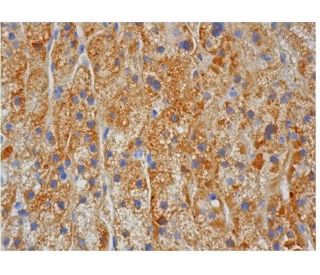


VCAM-1 Antibody (P3C4): sc-20070
- VCAM-1 Antibody (P3C4) is a mouse monoclonal IgG1 κ, cited in 7 publications, provided at 200 µg/ml
- recommended for detection of VCAM-1 of human origin by WB, IP, IF, IHC(P) and FCM
- available conjugated to either phycoerythrin or FITC for IF, IHC(P) and FCM
- also provided azide-free to inhibit VCAM-1 binding, sc-20070 L, 200 µg/0.1 ml
- See VCAM-1 (E-10): sc-13160 for VCAM-1 antibody conjugates, including AC, HRP, FITC, PE, Alexa Fluor® 488, 594, 647, 680 and 790.
- m-IgG Fc BP-HRP and m-IgG1 BP-HRP are the preferred secondary detection reagents for VCAM-1 Antibody (P3C4) for WB and IHC(P) applications. These reagents are now offered in bundles with VCAM-1 Antibody (P3C4) (see ordering information below).

QUICK LINKS
VCAM-1 Antibody (P3C4) is a mouse monoclonal IgG1 kappa light chain antibody that detects Vascular Cell Adhesion Molecule 1 (VCAM-1) in human samples through various applications including western blotting (WB), immunoprecipitation (IP), immunofluorescence (IF), immunohistochemistry with paraffin-embedded sections (IHCP), and flow cytometry (FCM). VCAM-1 is a transmembrane sialoglycoprotein predominantly expressed on activated endothelial cells, playing a pivotal role in mediating the adhesion of leukocytes to the endothelium during immune responses. This adhesion is crucial for the recruitment of immune cells to sites of inflammation, which is particularly significant in the context of inflammatory diseases such as atherosclerosis and rheumatoid arthritis. The structure of VCAM-1 comprises seven immunoglobulin-like domains, which are essential for high binding affinity to integrins like α4β1 and α4β7 found on leukocytes. These structural features not only facilitate leukocyte adhesion but also participate in signal transduction pathways that regulate cell survival and proliferation, underscoring VCAM-1′s importance in maintaining vascular integrity and immune function. VCAM-1 (P3C4) antibody serves as an invaluable tool for researchers aiming to elucidate the mechanisms of endothelial activation and vascular inflammation, enabling exploration of VCAM-1′s interactions with integrins and other proteins involved in immune cell trafficking and endothelial dysfunction.
Ordering Information
| Product Name | Catalog # | UNIT | Price | Qty | FAVORITES | |
VCAM-1 Antibody (P3C4) | sc-20070 | 200 µg/ml | $322.00 | |||
VCAM-1 Antibody (P3C4): m-IgG Fc BP-HRP Bundle | sc-538909 | 200 µg Ab; 10 µg BP | $361.00 | |||
VCAM-1 Antibody (P3C4): m-IgG1 BP-HRP Bundle | sc-541142 | 200 µg Ab; 20 µg BP | $361.00 | |||
VCAM-1 Antibody (P3C4) FITC | sc-20070 FITC | 200 µg/ml | $336.00 | |||
VCAM-1 Antibody (P3C4) L | sc-20070 L | 200 µg/0.1 ml | $322.00 | |||
VCAM-1 Antibody (P3C4) PE | sc-20070 PE | 200 µg/ml | $349.00 |