
LBP Background Information Lipopolysaccharide-binding protein (LBP) is essential for the rapid induction of an inflammatory response in the presence of small amounts of lipopolysaccharide (LPS) or Gram-negative bacteria. During Gram-negative bacterial infections, membrane associated LPS, the principal stimulator of the innate immune system, is bound by the acute-phase reactant LBP. Secretion of LBP sensitizes the immune system to endotoxin, enhances the neutralization of endotoxin by high density lipoprotein and, at elevated levels, protects against sepsis. The human LBP sequence consists of a 25-residue signal sequence followed by a 452-residue mature protein containing four cysteine residues and five putative glycosylation sites. During inflammation, LBP is secreted by hepatic cells and intestinal epithelial cells. LPS bound to LBP through lipid A moieties is transferred to LPS receptors (CD14) on the surface of macrophages or to high-density lipoprotein (HDL) particles.
LBP (N-17) Product Citations
See how others have used LBP (N-17): sc-14666 antibody and or LBP (N-17) antibody conjugates.
1 total citations
Loading citations.
LBP (N-17)
Click on image to enlarge
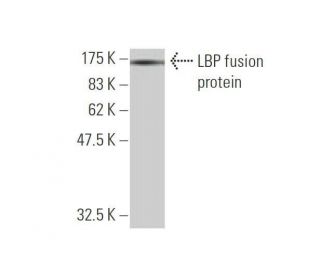
LBP (N-17): sc-14666. Western blot analysis of human recombinant LBP.
