
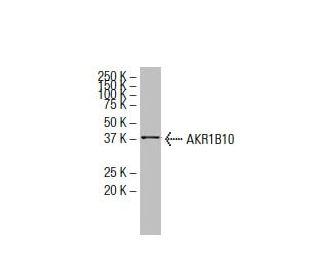
AKR1B10 Antibody (AA-1): sc-100501
- AKR1B10 Antibody (AA-1) is a mouse monoclonal IgG2a κ, cited in 4 publications, provided at 100 µg/ml
- raised against recombinant AKR1B10 of human origin
- recommended for detection of AKR1B10 of human origin by WB, IP, IF, IHC(P) and ELISA
- At present, we have not yet completed the identification of the preferred secondary detection reagent(s) for AKR1B10 Antibody (AA-1). This work is in progress.

AKR1B10 Antibody (AA-1) is a mouse monoclonal IgG2a antibody that detects AKR1B10 in human samples through various applications including western blotting (WB), immunoprecipitation (IP), immunofluorescence (IF), immunohistochemistry with paraffin-embedded sections (IHCP), and enzyme-linked immunosorbent assay (ELISA). AKR1B10, also known as aldose reductase-like-1 (ARL-1), small intestine reductase, or aldose reductase-related protein, is predominantly expressed in the small intestine, colon, and adrenal gland, where AKR1B10 plays a crucial role in the metabolism of steroids and the detoxification of aldehydes derived from digested food. AKR1B10 is particularly important as AKR1B10 helps to regulate cellular responses to carbonyl stress, which can be detrimental to cell health. Notably, AKR1B10 is significantly overexpressed in non-small cell lung carcinoma and adenocarcinoma, with cigarette smoking identified as a key factor contributing to this overexpression. The ability of AKR1B10 to efficiently reduce both aliphatic and aromatic aldehydes underscores AKR1B10′s potential role in protecting cells from oxidative damage and maintaining metabolic homeostasis. Anti-AKR1B10 antibody (AA-1) enables researchers to gain valuable insights into AKR1B10′s function and implications in various pathological conditions, particularly in cancer research and studies related to metabolic disorders.
Ordering Information
| Product Name | Catalog # | UNIT | Price | Qty | FAVORITES | |
AKR1B10 Antibody (AA-1) | sc-100501 | 100 µg/ml | $339.00 |